
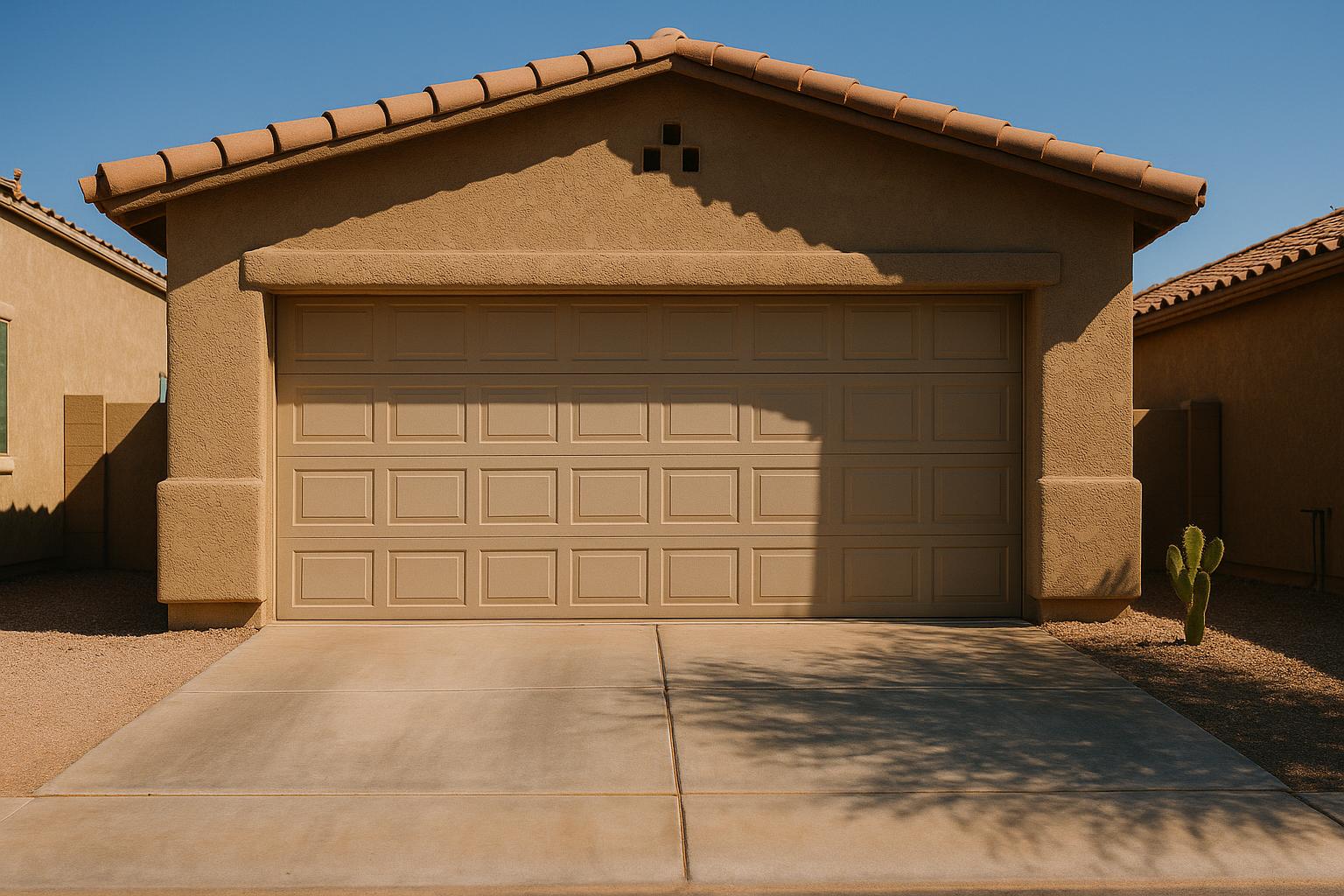
When Triple-Digit Temps Take a Toll on Your Garage Door
If you've lived in Tolleson for even one summer, you know what 115°F feels like. You also know that extreme heat doesn't just affect you — it affects everything in and around your home, including your garage door. When temperatures climb into triple digits, garage door failures spike across the West Valley. Homeowners step out to leave for work and find their garage door stuck, sluggish, or completely unresponsive.
It's one of the most common calls we get at Tolleson Garage Door Co between May and September. The good news is that most heat-related garage door problems are preventable — and fixable — once you understand what's going on.
Why Extreme Heat Causes Garage Door Problems
Your garage door is the largest moving part of your home, and it relies on a system of mechanical and electrical components that are all sensitive to temperature. Here's how Arizona heat can disrupt that system:
Metal Expansion
Garage door tracks, springs, and hardware are made of metal. When temperatures soar, metal expands. Even a small amount of expansion in the tracks can cause the door to bind, stick, or move unevenly. You might hear grinding or scraping sounds, or the door might stop partway through its travel.
Lubricant Breakdown
The lubricant on your springs, rollers, and hinges can dry out or break down much faster in extreme heat. When lubrication fails, friction increases. That extra friction puts strain on your opener motor and can cause the door to move slowly, jerk, or stop altogether.
Opener Motor Overheating
Your garage door opener has an electric motor, and like any motor, it generates heat when it runs. In a garage that's already 130°F or hotter inside, that motor has no way to cool down efficiently. Many modern openers have a thermal protection feature that automatically shuts the motor off when it overheats. If your garage door opener suddenly stops responding and then works again after cooling down, this is likely the cause.
Sensor Misalignment
The safety sensors at the bottom of your garage door tracks are required by federal law. They use an infrared beam to detect obstructions. Heat can cause the brackets holding these sensors to shift slightly as metal expands and contracts throughout the day. Even a tiny misalignment can prevent the door from closing.
Weather Seal Sticking
The rubber weather seal along the bottom of your garage door can soften and become sticky in extreme heat. When the door sits closed on hot concrete for hours, the seal can actually bond to the floor. When the opener tries to lift the door, it meets unexpected resistance, which can trigger the auto-reverse safety feature or strain the opener.
What You Can Do Right Now
You don't need to be a garage door technician to take a few smart steps that protect your system during the hottest months. Here's what we recommend to our customers in Tolleson and the surrounding areas:
Keep Your Garage Cooler
A cooler garage means less stress on every component. If your garage has windows, consider covering them with reflective film. Make sure the weatherstripping around the garage door is intact to keep hot air from seeping in. Some homeowners install a small fan or ventilation system to keep air circulating. Every degree you bring the temperature down helps.
Lubricate Moving Parts Regularly
During summer, we recommend lubricating your garage door's moving parts every 6 to 8 weeks instead of the typical twice-a-year schedule. Use a silicone-based or lithium-based garage door lubricant on the springs, rollers, hinges, and tracks. Avoid WD-40 — it's a solvent, not a long-term lubricant, and it dries out quickly in the heat.
Test the Door Balance
Disconnect the opener by pulling the emergency release handle, then manually lift the door halfway. If it stays in place, the balance is good. If it falls or rises on its own, the springs may need adjustment. An unbalanced door forces the opener to work harder, which accelerates overheating.
Check Your Sensors
Look at the two sensors near the floor on either side of the door. Each one should have a steady light — typically one green and one amber. If either light is blinking, the sensors are misaligned. Gently adjust them until both lights are steady. Make sure nothing is blocking the beam, including dust, cobwebs, or debris.
Don't Cycle the Door Repeatedly
If your opener stops working and you suspect overheating, resist the urge to keep pressing the button. Give the motor at least 15 to 20 minutes to cool down before trying again. Repeatedly cycling an overheated motor can cause permanent damage to the unit.
When to Call a Professional
Some heat-related issues are easy to handle on your own. Others require a trained technician. Call a professional if you notice any of the following:
- The door is visibly off-track or crooked
- Springs appear stretched, damaged, or broken
- The opener motor runs but the door doesn't move
- You hear loud popping, snapping, or grinding sounds
- The door won't stay open when disconnected from the opener
- Your garage door is completely stuck and won't budge manually
Attempting to fix spring or track issues yourself can be dangerous. Garage door springs are under extreme tension and can cause serious injury if handled improperly.
Prevent Summer Breakdowns with a Tune-Up
The best way to avoid a heat-related garage door failure is to schedule a maintenance visit before summer hits full force. A professional tune-up includes lubricating all moving parts, checking spring tension and door balance, inspecting the opener motor, aligning sensors, tightening hardware, and testing all safety features.
At Tolleson Garage Door Co, we see the same preventable problems every summer. A 30-minute maintenance visit can save you from being stuck in your garage on the hottest day of the year — or worse, coming home to a door that won't close and leaving your home exposed.
We're Here When the Heat Hits
If your garage door is acting up this summer, don't wait for a complete breakdown. Whether you're in Tolleson, Avondale, Goodyear, Buckeye, Litchfield Park, or Glendale, our team is ready to help. We offer same-day service and emergency repairs because we know garage door problems don't wait for a convenient time.
Give us a call or schedule a service appointment online. We'll get your garage door back on track — even when the thermometer says otherwise.