
Your Garage Door Springs Are Under More Stress Than You Think
Every time your garage door opens and closes, the springs do the heavy lifting — literally. A standard two-car garage door can weigh anywhere from 150 to 300 pounds, and the springs are responsible for counterbalancing all of that weight. Over time, that constant tension takes a toll.
Most garage door springs are rated for about 10,000 cycles, with one cycle being a single open-and-close. If you use your garage door four times a day, that's roughly seven years of life. But here in Tolleson, where summer temperatures regularly push past 110°F, the extreme heat can accelerate metal fatigue and shorten that lifespan even further.
The good news? Springs rarely snap without warning. If you know what to look for, you can catch the problem early and avoid the inconvenience — and safety hazard — of a sudden failure.
7 Warning Signs Your Garage Door Springs Are Failing
1. The Door Feels Heavier Than Usual
Try this simple test: disconnect your garage door opener by pulling the emergency release cord, then manually lift the door about halfway. A properly balanced door should stay in place on its own. If it feels unusually heavy or slides back down, your springs are losing tension and struggling to support the door's weight.
2. The Door Opens Unevenly or Crooked
If one side of your garage door rises faster than the other, it could mean one spring is weaker or has already broken. This puts extra strain on the remaining spring and your opener, which can lead to more expensive repairs down the road. An uneven door is never something to ignore.
3. You Hear Loud Squeaking or Grinding
Some noise during operation is normal, but loud squeaking, popping, or grinding sounds are red flags. These noises often indicate that the spring coils are rubbing against each other due to wear, or that the springs have lost lubrication. While lubrication can help temporarily, persistent noise usually means the springs are nearing the end of their life.
4. Visible Gaps in the Spring Coils
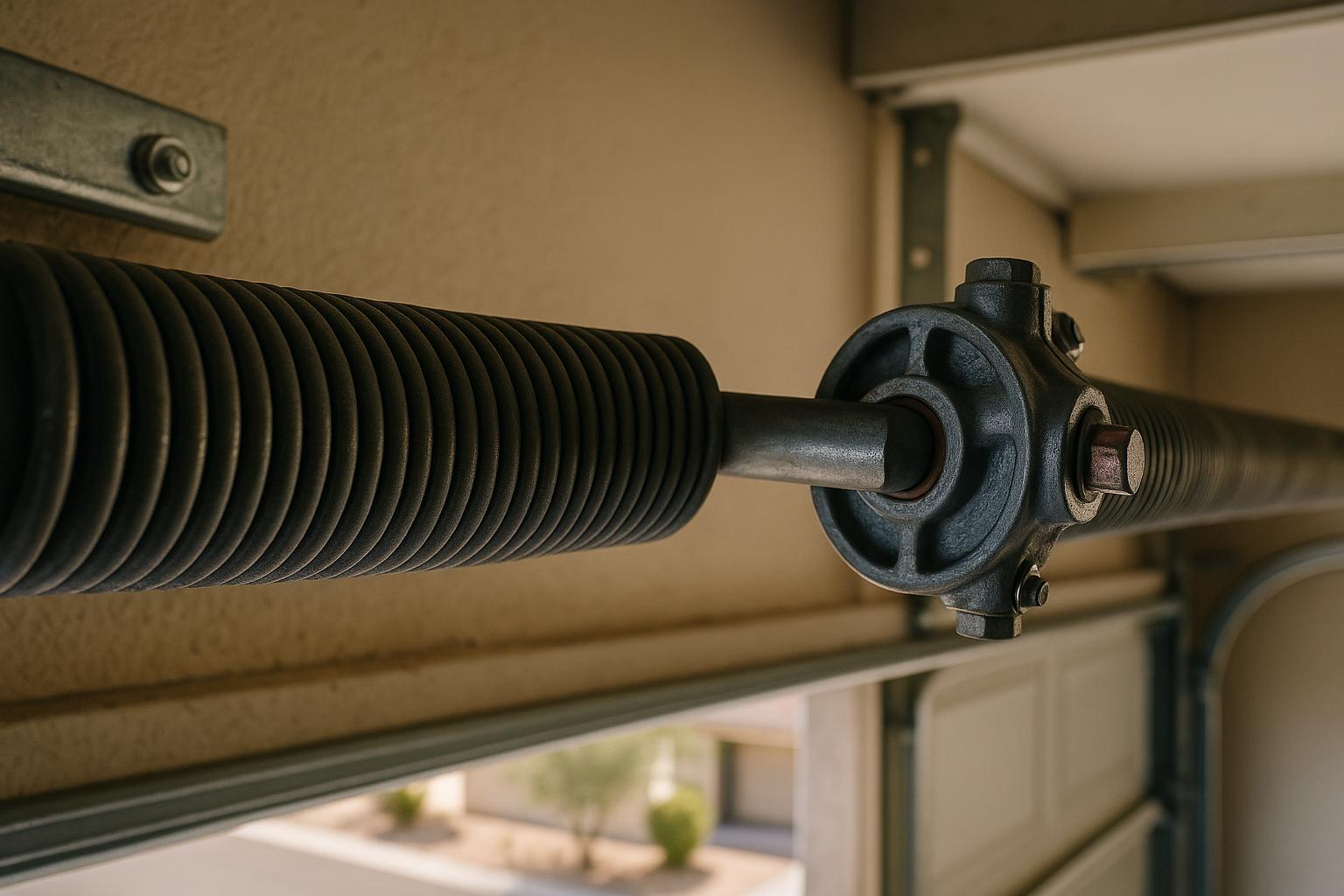
Take a look at the torsion spring mounted above your garage door. On a healthy spring, the coils are tightly wound with no visible gaps. If you notice a gap or separation between the coils, the spring has already broken or is about to. This is one of the most obvious signs, and it means you need a replacement immediately.
5. The Door Slams Shut Quickly
When springs are functioning properly, they control the speed at which your door closes. If your garage door drops faster than normal or slams shut, the springs aren't providing enough resistance. This is a serious safety concern, especially if you have kids or pets who might be near the door.
6. Your Opener Is Struggling
Your garage door opener is designed to guide the door — not to lift all the weight by itself. If you notice your opener straining, making unusual noises, or stopping mid-cycle, worn-out springs could be forcing it to work overtime. Continuing to use the opener under these conditions can burn out the motor and leave you with two problems instead of one.
7. Rust or Corrosion on the Springs
Rust weakens metal and increases friction between the coils, which accelerates wear. While Tolleson's dry desert climate means less humidity than other parts of the country, dust and debris can still contribute to corrosion over time. If your springs look rusty or corroded, they're more likely to fail sooner than expected.
Why You Should Never Replace Garage Door Springs Yourself
We understand the temptation to tackle home repairs on your own — but garage door springs are one job that should always be left to a professional. Here's why:
- Extreme tension: Torsion springs are wound under tremendous force. If they release unexpectedly during removal or installation, they can cause severe injuries.
- Specialized tools required: Proper spring replacement requires winding bars, clamps, and other tools that most homeowners don't have.
- Precise calibration: Springs must be matched to your door's exact weight and size. The wrong spring or incorrect winding can cause the door to malfunction or create a dangerous imbalance.
- Warranty concerns: DIY spring work can void the warranty on your garage door and opener.
At Tolleson Garage Door Co, our technicians handle spring replacements every day. We carry the most common spring sizes on our trucks, so most jobs are completed in a single visit.
Torsion Springs vs. Extension Springs: What's the Difference?
There are two main types of garage door springs, and knowing which type you have can help you communicate with your repair technician:
- Torsion springs are mounted on a metal shaft directly above the garage door opening. They use torque to lift the door and are the more common type found in modern homes throughout Tolleson and the West Valley.
- Extension springs run along the horizontal tracks on both sides of the door. They stretch and contract to provide lifting force. These are more common in older homes and are generally considered less safe because they can become projectiles if they snap without a safety cable.
If you have extension springs and they're showing signs of wear, it may be worth upgrading to a torsion spring system for improved safety and smoother operation.
How to Make Your Garage Door Springs Last Longer
While springs will eventually wear out no matter what, a little preventive care can extend their lifespan:
- Lubricate the springs every six months with a silicone-based garage door lubricant. This reduces friction and helps prevent rust.
- Schedule annual maintenance. A professional tune-up includes inspecting the springs, testing the door's balance, and catching small issues before they become big ones.
- Minimize unnecessary cycles. Every open-and-close counts toward the spring's total lifespan. If you're running in and out of the garage multiple times a day, consider using the house entry door instead when possible.
- Consider high-cycle springs. If you use your garage door frequently, ask about springs rated for 25,000 or even 50,000 cycles. They cost a bit more upfront but save money in the long run.
Don't Wait for a Spring to Snap
A broken garage door spring doesn't just leave your car stuck in the garage — it can damage your door panels, destroy your opener motor, and create a genuine safety hazard. If you've noticed any of the warning signs above, it's time to get your springs inspected.
Tolleson Garage Door Co provides fast, affordable spring replacement for homeowners across Tolleson, Avondale, Goodyear, Buckeye, Litchfield Park, and Glendale. We'll assess the condition of your springs, recommend the right replacement, and get your door back in working order — usually the same day you call.
Don't wait until you're stuck. Give us a call and let's take care of it before it becomes an emergency.